Chlorantraniliprole
Chlorantraniliprole
Chlorantraniliprole
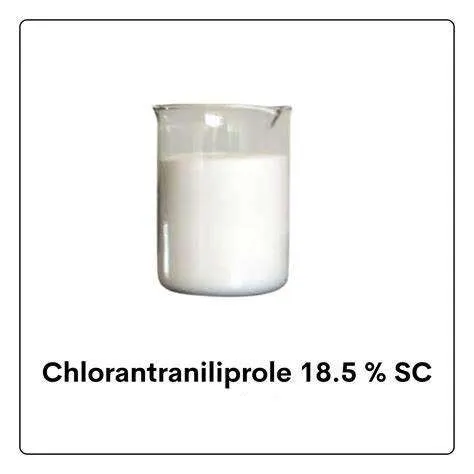
Chlorantraniliprole is an insecticide in the ryanoid class and a new compound by DuPont. It belongs to a new class of selective insecticides—anthranilic diamides—with a novel mode of action (IRAC group 28).
Request a QuoteChlorantraniliprole is an insecticide in the ryanoid class and a new compound by DuPont. It belongs to a new class of selective insecticides—anthranilic diamides—with a novel mode of action (IRAC group 28).
CAS No.: 500008-45-7
Molecular Formula: C18H14BrCl2N5O2
Molecular Weight: 483.15
Melting point: approx. 225°C (decomposes)
Boiling point: 526.6 ± 50.0 °C (Predicted)
Density: 1.66 ± 0.1 g/cm³ (Predicted)
Storage temperature: 2–8°C
Solubility: Chloroform—Slightly soluble; DMSO—Slightly soluble
Form: Solid (form A)
pKa: 10.19 ± 0.70 (Predicted)
Color: White to off-white
LogP: 3.641 (estimated)
CAS Database reference: 500008-45-7
Symbol (GHS) |
|
Signal word |
Warning |
Hazard statements |
H410 |
Hazard Codes |
Xn |

Chlorantraniliprole is an insecticide in the ryanoid class. It is a new compound developed by DuPont, belonging to a new class of selective insecticides (anthranilic diamides) with a novel mode of action (Group 28 in the IRAC classification). It is the first anthranilic diamide registered for use on turfgrass and landscape ornamentals. It is used to control a broad spectrum of pests, including cabbage loopers, corn borers, Colorado potato beetle, European grapevine moth, armyworms, and cutworms, across crops such as potatoes and cotton. Its mode of action is based on activating insect ryanodine receptors (RyRs), which further stimulates the release and depletion of intracellular calcium stores from the sarcoplasmic reticulum of muscle cells, leading to impaired muscle regulation, paralysis, and ultimately death of sensitive species.
Formulations containing chlorantraniliprole are used in agriculture to control moths, beetles, and caterpillars, among other insects.
White crystalline solid; specific gravity (for liquid): 1.507 g/mL; melting point: 208–210°C; decomposition temperature: 330°C; vapor pressure (20–25°C): 6.3×10¹² Pa; solubility (20–25°C, mg/L): water 1.023, acetone 3.446, methanol 1.714, acetonitrile 0.711, ethyl acetate 1.144.
Chlorfenvinphos: It is highly efficient and broad-spectrum, with good control performance against Lepidoptera of Noctuidae, stem borer moths, fruit moths, leaf roller moths, pink moths, vegetable moths, wheat moths, and other similar pests. It can also control Sphingidae (including weevils), leaf beetles; Diptera subterranean flies; sooty flies; and many other non-Lepidopteran pests.
Chlorantraniliprole is a pyrazolylpyridine insecticide and an activator of the insect ryanodine receptor.