Lufenuron
Lufenuron
Lufenuron
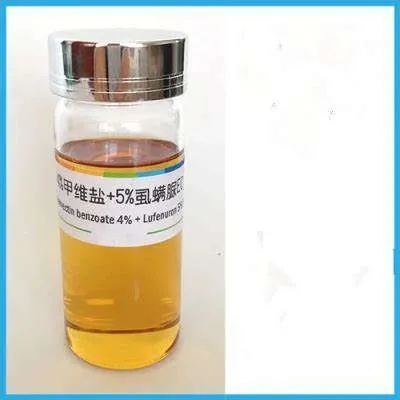
Lufenuron is an insect development inhibitor in the benzoylphenyl urea class. It is active against fleas that have fed on treated cats and dogs and are exposed to lufenuron through the host’s blood.
Request a QuoteLufenuron is an insect development inhibitor in the benzoylphenyl urea class. It is active against fleas that have fed on treated cats and dogs and are exposed to lufenuron through the host’s blood.
CAS No.: 103055-07-8
Molecular Formula: C17H8Cl2F8N2O3
Molecular Weight: 511.15
Melting point |
174.1° |
Density |
1.631±0.06 g/cm³ (Predicted) |
Vapour pressure |
<0.4 x 10⁻³ Pa (25 °C) |
Flash point |
170 °C |
Storage temperature |
0–6 °C |
Solubility |
100 mg/L in organic solvents at 20 °C |
Form |
Solid |
pKa |
8.49±0.46 (Predicted) |
Water solubility |
<0.06 mg/L (25 °C) |
Colour |
Off-white to light yellow |
Symbol (GHS) |
|
Signal word |
Warning |
Hazard codes |
Xi; N, N; Xi |
RIDADR |
3077 |
WGK (Germany) |
2 |
Hazard class |
9 |
Packing group |
III |
HS code |
29242990 |


Description
Lufenuron is an insect development inhibitor of the benzoylphenyl urea class. It exhibits activity against fleas that have fed on treated cats and dogs and become exposed to lufenuron through the host’s blood. Lufenuron also acts via its presence in adult flea faeces, resulting in ingestion by flea larvae. Both mechanisms lead to the production of eggs that are unable to hatch, causing a significant reduction in flea larvae populations. Due to its lipophilicity, lufenuron is deposited in the animals’ adipose tissues and slowly released into the bloodstream. This helps maintain effective blood concentrations throughout the recommended oral dosing interval of 1 month.
Uses
Lufenuron is used for the control of Lepidoptera and Coleoptera larvae on cotton, maize, and vegetables, and for the control of citrus whitefly and rust mites on citrus fruit. It is also used to control fleas on pets and cockroaches in houses. Lufenuron is approved for use in dogs and cats aged 6 weeks and older for the control of flea populations.